About Mike Kelly
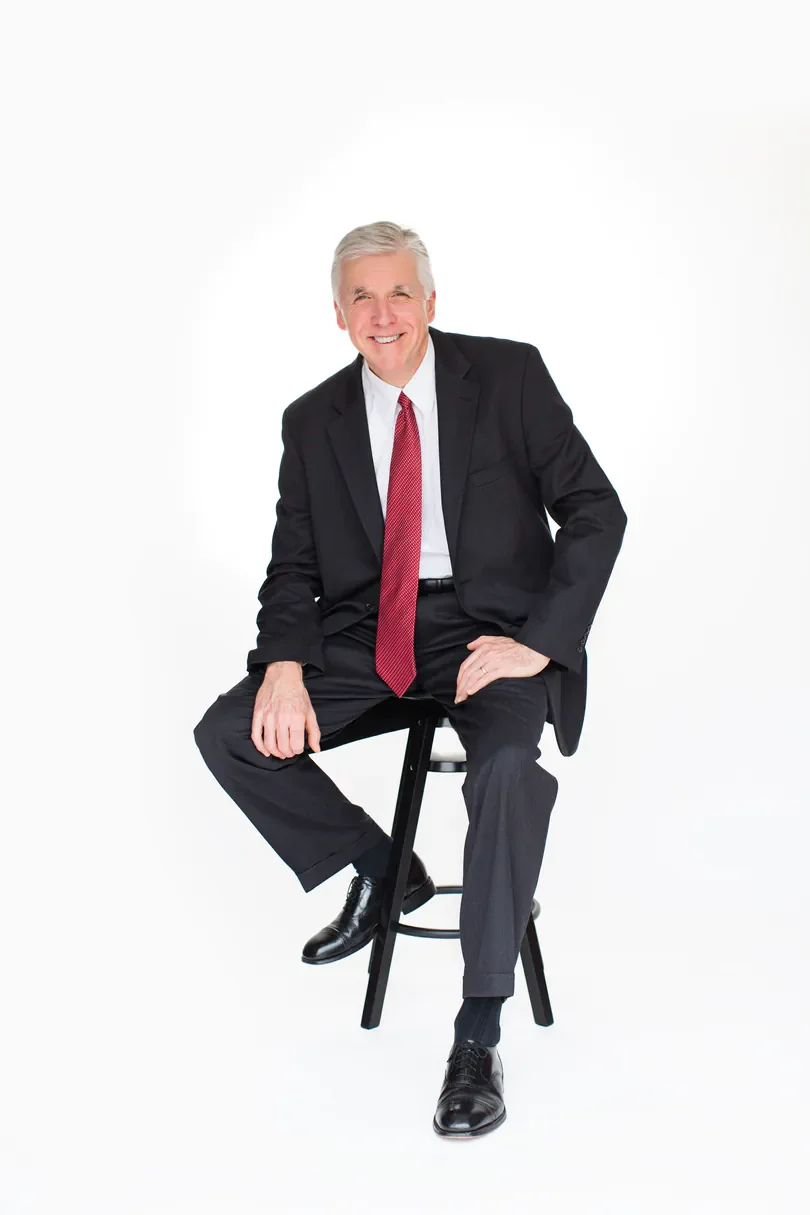
Mike Kelly is an award-winning journalist and the author of four critically acclaimed books, as well as a podcast producer and documentary film consultant.
As a newspaper columnist and project writer with The Record in northern New Jersey and now with the USA Today Network, Kelly has covered some of the biggest and most complicated stories of the last 50 years. His travels have taken him across America and overseas.
In the United States, Kelly’s coverage ranges from the 9/11 terrorist attacks and the fraying of race relations over police shootings to the erosion of the “American Dream” among the nation’s working class and the economic and cultural factors behind voters’ support for President Donald Trump. Other notable assignments include the landmark bioethics Baby M surrogate mother case, the efforts by families to escape from religious cults, the rise and fall of Atlantic City as a gambling mecca, the sex abuse scandal in the Roman Catholic church, the impeachment of President Bill Clinton, the devastation of New Orleans after Hurricane Katrina, the struggles by the 9/11 Commission to find the truth about America’s deadliest terrorist attack and then try to reform U.S. counter-terrorism agencies, the Pan Am 103 terrorist attack, the Boston Marathon terrorist bombing, the New Jersey “Bridgegate” political scandal and the long effort to reduce poverty in one of America’s poorest cities, Camden, New Jersey.
After Donald Trump won the presidential election in 2016, Kelly devoted several years to reporting and writing a series of ground-breaking columns that examined the decline of America’s industrial rust belt and its impact on politics.
Kelly also emerged in recent years as one of the few journalists in America to investigate controversial connections between Saudi Arabian government officials and the 9/11 attacks. His reports on the Saudi-9/11 ties resulted in several national scoops, including one in which he documented how a gas station attendant from Paterson, New Jersey, was guided by a Saudi operative to assist several 9/11 hijackers in finding apartments, opening bank accounts and renting cars in northern New Jersey.
Kelly’s foreign assignments encompass the Iraq War, the Israeli Palestinian conflict, the negotiations for peace in Northern Ireland, the planning of the 9/11 attacks in Malaysia, the struggles to improve health care in Africa and political and religious tensions in Cuba.
For the Iraq War, he followed a single National Guard company for nearly 18 months through training and eventual deployment to the combat zone. The ranks of the unit’s nearly 150 soldiers included mothers of toddlers, grandparents, aging Vietnam veterans, police officers, salesmen, bus drivers, lawyers and teachers. In short, a slice of America.
His multiple assignments to cover the Israeli-Palestinian conflict began with his extensive narrative series in 2001, “Fire in the Hills,” which tracked a Palestinian family and a Jewish family who moved from their homes in New Jersey and settled in neighboring Israeli and Palestinian communities on the West Bank where their daily lives were affected by violence. His later research into Palestinian suicide bombings which took him across the West Bank and into the Hamas-controlled Gaza Strip became the basis for his book, The Bus on Jaffa Road.
In Northern Ireland, Kelly chronicled the final efforts to bring peace between Catholics and Protestants and how the religious differences in that conflict left major emotional scars on ordinary life there.
As a way of delving more deeply into the emotional impact of the 9/11 attacks, Kelly devoted nearly nine months to following the recycling journey of a single steel beam from New York’s World Trade Center to a Malaysian steel mill while also documenting the efforts to rebuild the lives of office workers on the floor where that beam had been situated. Using architectural drawings and deciphering engineering codes, Kelly even tracked down the worker whose desk looked out the office window that was framed by that single beam. Kelly’s reporting from Malaysia was also significant in light of the fact that several of the 9/11 terrorists met there to finalize plans before flying to the United States and hiding for a time in a motel in New Jersey. Kelly is one of the few western journalists to visit the apartment on the outskirts of Malaysia’s capital, Kuala Lumpur, where those 9/11 plotters gathered. His 14,000-word narrative story, “Journey Through Shadow,” was published on the first anniversary of the 9/11 attacks and later nominated for a Pulitzer prize.
For a project that explored efforts to improve health care in poor nations, Kelly followed the trek by an idealistic team of volunteer American doctors and nurses to a remote community in Kenya’s Great Rift Valley. In a 3-part narrative account, entitled “Paths of Hope,” Kelly told the story through the eyes of a single Kenyan family – and their 50-mile trek on foot from a mud hut to a run-down hospital where the Americans worked for two weeks treating hundreds of desperate people.
In Cuba, Kelly covered the ground-breaking 2015 visit of Pope Francis – and its impact on efforts to improve ties between the U.S. and the communist nation. Afterwards, Kelly set off to report on one of the most controversial obstacles to U.S.-Cuban relations: the Castro regime’s long-standing tradition of offering asylum to American fugitives – particularly fugitives who had been charged with alleged revolutionary activities. Kelly tracked the whereabouts of several of the most notorious of these U.S. fugitives. These included Black Liberation Army leader Joanne Chesimard (aka Asata Shakur), who escaped U.S. custody after being convicted of murdering a New Jersey State Trooper in 1973; Puerto Rican nationalist bombmaker Guillermo “Willie” Morales, the suspected mastermind of the bomb explosion in 1975 at New York City’s Fraunces Tavern that killed four financial executives, and Cheri Laverne Dalton (aka Nehanda Abiodun), who drove a getaway car for Weather Underground and Black Liberation Army operatives in 1981 after they robbed a Brinks armored truck in Nanuet, N.Y., and killed a Brinks guard and two police officers.
On any given day, however, Kelly’s writing often chronicles the hopes, dreams and struggles of ordinary people. These columns range from his profile of a man in suburban New Jersey man charged with animal cruelty after killing a rat to a visit to an orphanage for children who tested positive for HIV, a profile of a mother facing the painful decision to institutionalize her disabled baby, a description of nudist colony trying to cope with cold winds of winter and life in the homeless community that lives under the boardwalk in Atlantic City.
Kelly’s writing has also been singled out for numerous awards – namely, Columbia University’s Meyer Berger prize and honors by New York City’s Deadline Club and New York’s Society of Silurians. The New Jersey Press Association has honored Kelly nearly two dozen times with a variety of awards, including the prestigious “Journalist of the Year” for his reporting and commentary after the 9/11 attacks. He is also a two-time winner of the top writing prize from the National Association of Newspaper Columnists. One of his most cherished honors, however, came from the New York City Fire Department. Along with two dozen other journalists, Kelly received a special award from the FDNY for his sensitive coverage of the search for bodies after the 9/11 attacks and the resulting health problems for fire fighters, police and construction workers who sifted through the rubble of the World Trade Center that came to be known as “Ground Zero.”
His approach as a journalist and as a book author is summed up in this personal mantra of sorts from the introduction to Fresh Jersey: Stories from an Altered State, a collection of his columns:
“I begin each day with a journalist’s notebook and the privilege of a columnist in search of people and their stories. Sometimes I walk away angry and disillusioned at the lonely river of pain that engulfs some people. Sometimes I walk away a better man, amazed at how the most ordinary among us can teach us the most extraordinary lessons.”
Fresh Jersey was described as “wonderful, touching, funny, perceptive” by best-selling novelist Mary Higgins Clark. Other reviewers cited Kelly’s “keen eye and voice” and noted that his writing is a “very good reason why people read newspapers”
Kelly’s first book, Color Lines: The Troubled Dreams of Racial Harmony in an American Town, told the story of a small New Jersey town’s political, cultural and social struggles after a white police officer shot and killed an African-American teenage boy. Citing Kelly’s deep reporting and his even-handedness in exploring the controversy through the lives of 10 diverse people, The Washington Post called the book “American journalism at its best.” J. Anthony Lukas, author of the landmark, Pulitzer-winning book about race, Common Ground, called Color Lines “a stunning piece of American social history.”
After the murder of George Floyd in 2020, Color Lines, which was re-published as a paperback with an updated epilogue, became required reading in many communities and was the basis for a podcast series on police relations and African-Americans. The book was also a centerpiece of the 4-part MSNBC series, “Model America,” which was broadcast in 2022 and featured Kelly as a commentator and consultant.
Kelly’s third book, The Bus on Jaffa Road: A Story of Middle East Terrorism and the Search for Justice, chronicled how several American families fought a landmark legal battle in U.S. courts after a Hamas suicide bomber murdered their children in Jerusalem. The book, which involved extensive reporting from Israel, the West Bank, the Gaza Strip and in the United States, begins with Kelly interviewing a Hamas bombmaker in his Israeli jail cell. Published in 2014 and released as an audio book in 2022, The Bus on Jaffa Road has been described by reviewers as “a literary classic”, “non-fiction at its very best” and a “masterpiece” that “goes deep below the rhetoric on the ‘war on terror’.”
Kelly’s fourth non-fiction book, After Ground Zero: Everyday Americans and the Unhealed Scars of 9/11, chronicles the lives of two dozen people in the aftermath of America’s deadliest terrorist attacks. For Kelly, this was also a very personal story. He begins the book with his crossing of the Hudson River on September 11, 2001 and walking into the rubble of the World Trade Center’s twin towers. From there, Kelly traces the story of 9/11 and the wider implications of worldwide terrorism to Iraq, Malaysia, Africa, Northern Ireland, Israel, Gaza, the West Bank and Cuba, as well as Washington D.C. The people profiled in his book range from police officers and fire fighters to soldiers deployed overseas, relatives of 9/11 victims and others who have devoted their lives to find the truth behind the attacks.
Susan Page, the Washington bureau chief of USA Today, wrote: This poignant book is laced with tragedy and with hope, the story not only of the horror of death but also of the resilience of life.
New York Times journalist Anthony DePalma, whose book, “City of Dust” was the first to pinpoint the health problems for Ground Zero responders, wrote: “After Ground Zero is a searing global, political, legal, social, moral, and generational account of a turning point in our history, researched impressively over decades, reported with insight and humility, and told in a way that should resonate for ages.”
Michael Daly, columnist at The Daily Beast and The New York Daily News as well as author of “The Book of Mychal” about the beloved Roman Catholic fire department chaplain, Father Mychal Judge, who was killed on 9/11, said “After Ground Zero tells how 9/11 still reverberates in us a quarter century later and why we should never forget it even if we were able. One way to honor the fallen is to read this book.
Kelly’s father was a highly decorated career U.S. Marine officer who served in World War II, Korea and Vietnam. His mother was one of the first women to enlist in the Marines during World War II. Both are buried at Arlington National Cemetery.
Kelly began his schooling in Japan as the only American in a Japanese pre-school class during a deployment to that nation by his father. Back in America and with his father assigned to several military posts near Washington, D.C., Kelly attended Roman Catholic grammar schools in Northern Virginia. After his family moved to Upstate New York, Kelly graduated from Fayetteville-Manlius High School in Manlius, New York, then enrolled at Syracuse University where he received a BA in American Studies and journalism. In his mid-50s, Kelly went back to school and received a MA in theology from Fordham University where he devoted portions of his research to an analysis of the theology behind Islamic suicide bombing. His nearly 70-page master’s thesis examined the roots of antisemitism in the Christian gospels.
Kelly has appeared often on radio and television, notably on National Public Radio, the CBS Evening News, CNN, MSNBC and FOX. His reporting on a National Guard unit in Iraq was profiled in a special PBS report by Bill Moyers on the war in Iraq.
He is proud that he started his career as a reporter, editor and columnist at the Syracuse University Daily Orange, an independent campus newspaper that paid him a hefty salary of $17.50. Another source of pride, as well as great memories, was his 1973 summer internship as a cub reporter at the Washington Bureau of The Chicago Tribune in which he assisted in coverage of hearings before the Senate Watergate Committee, including the historic testimony by White House counsel John Dean and a laugh-filled afternoon when John Lennon and Yoko Ono showed up as spectators.
Kelly has made his home for the past four decades in Teaneck, New Jersey. He is married and the father of two adult daughters. In his spare time, he plays guitar and mandolin – and struggles to hit a top-spin backhand in tennis. He also labors mightily as a gardener, often trying to negotiate with a family of deer who sample his tomatoes and enjoy pushing their noses against wind chimes that hang from an apple tree in what seems to be an effort to bring more music into the world.